
This guide explains what the numbers show about infrared heaters by reviewing installed load, heat-up time, rejection rate and production stability, not only heater wattage.
Energy cost is one of the largest operating expenses in plastic extrusion, injection moulding and blown film production. The heating system directly determines how much of that electricity is converted into usable process heat and how much is lost to the environment.
Why Conventional Band Heaters Waste Energy
Conventional mica or ceramic band heaters heat the barrel surface by conduction. A significant proportion of the heat generated radiates away from the barrel into the surrounding air rather than into the material being processed. This waste is compounded in open factory environments where ambient airflow increases convective losses.
How Quartz Tube Infrared Heaters Are Different
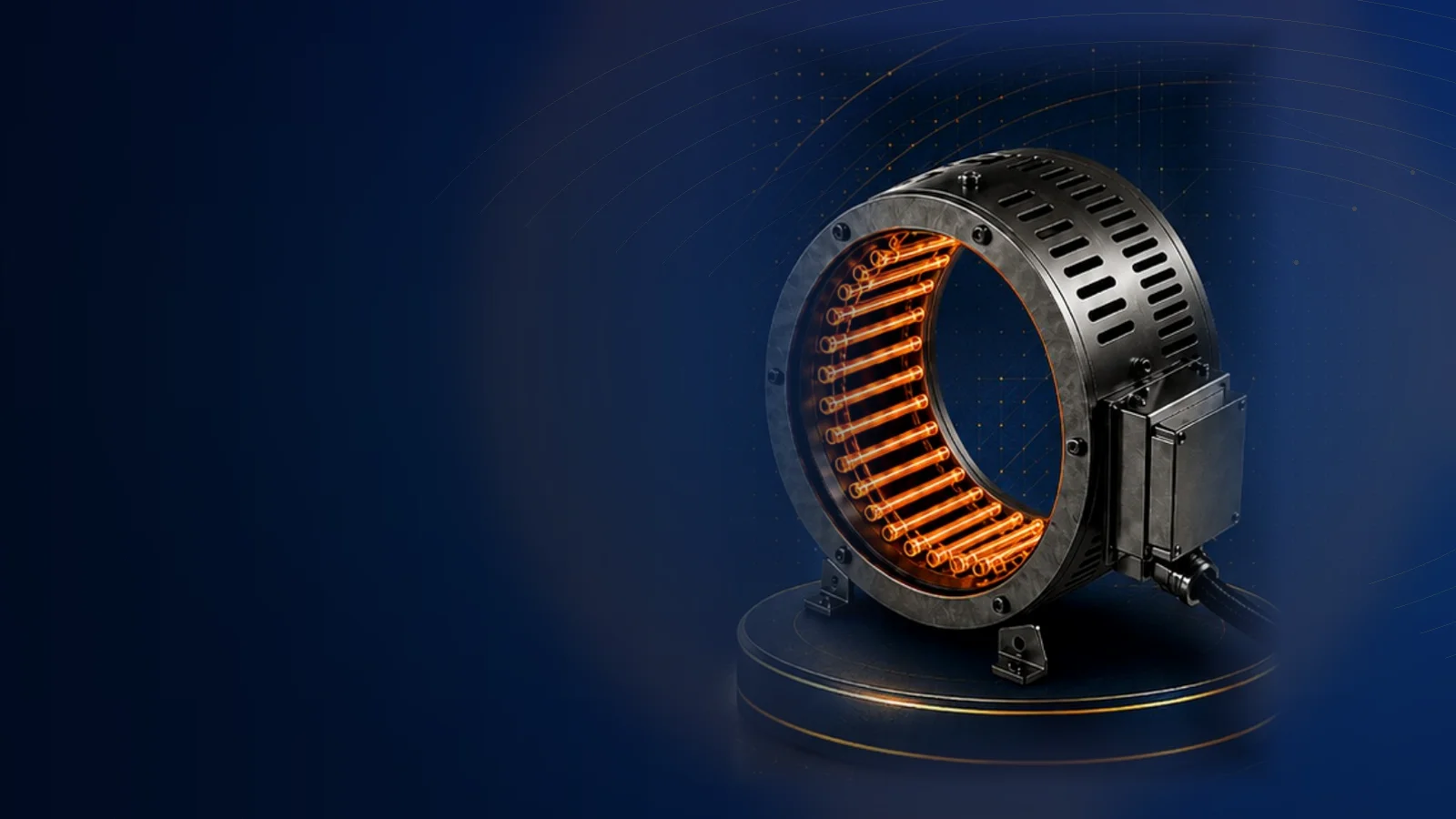
Quartz tube infrared heaters emit focused infrared radiation that is absorbed directly at the barrel surface. The emission spectrum is matched to the absorption characteristics of the target material, maximising energy transfer efficiency. The outer surface of a quartz tube heater stays significantly cooler than a band heater at the same set-point temperature, confirming that more of the energy is going into the process.
Observed Savings by Application
In injection moulding, documented customer installations show energy savings of 39 to 49 percent. Extrusion lines have shown savings up to 58.8 percent. Blown film applications show consistent savings in the 35 to 45 percent range. The exact figure depends on the existing heating system, barrel diameter, set-point temperature and production cycle.
Payback Period
For most mid-to-large extrusion lines running two or three shifts, the energy savings alone deliver a full return on investment within 12 to 18 months.